

7 Decorative Paper Types Every Crafter Should Know
Last Updated: November 17, 2026
Quick Summary
Decorative paper is any sheet chosen for its appearance as much as its function, from block-printed Lokta to smooth cotton rag and translucent vellum. Match the sheet to the job: card blanks need stiff 200-300gsm cardstock, scrapbook pages want 120-160gsm, and origami demands thin, crisp paper. Buy small, test, then scale.
- A paper pad of 24 to 48 sheets is a sensible starting point for scrapbooking.
- Tissue and lightweight sheets under 60gsm suit overlays, decoupage and lining.
- Handmade Lokta and cotton rag need an alum wash before marbling so colour bonds.
- Our Lokta wrapping papers are £2.99 per large sheet, roughly 50cm × 76cm.
- Most crafters overbuy patterns and underbuy neutrals, so weight orders toward plain sheets.
Table of Contents
- A Practical Guide to Choosing Decorative Paper by Project
- Paper Weights, Finishes and Material Properties Compared
- How to Make Decorative Paper at Home
- Paper Marbling: Techniques, Troubles and Fixes
- Decorative Paper for Gift Wrapping That Looks Considered
- Printing on Handmade Paper Without Ruining the Texture
- Sustainable and Recycled Options, and What They Cost
- Choosing Your First Sheets and Sampling the Range
- Frequently Asked Questions
A Practical Guide to Choosing Decorative Paper by Project
Decorative paper is any sheet chosen for its appearance as much as its function, from block-printed Lokta to smooth cotton rag and translucent vellum. The right sheet makes a clear difference to a finished project. The wrong weight can buckle under glue, and the wrong surface can feather under a fountain pen. Below, you can see how to match sheet to project so your first order is less of a guess.
Match the paper to the job, not the other way round. A card blank needs a stiff 200-300gsm cardstock that stands up on a shelf. Scrapbook pages want a lighter 120-160gsm sheet that layers without bulk. Origami demands thin, crisp paper that holds a fold, while vellum suits overlays and invitations where translucency is the point. Get this one decision right and everything downstream, from adhesive to printer, becomes easier.
Matching Sheet Size and Sheet Count to the Job
Sheet size drives both cost and waste. Standard A4 covers most card making and printing needs, while A3 gives you room for larger scrapbook layouts and folded cards. Smaller A6 and A5 sheets suit tags, toppers and sample packs.
Sheet count matters more than beginners expect. A single large sheet of Lokta wrapping paper measures roughly 50cm × 76cm and can wrap several small gifts or yield dozens of card toppers. A paper pad of 24 to 48 sheets is the sensible starting point for scrapbooking, because you get coordinated patterns without committing to a full ream. Buy small, test, then scale.
Paper Weights, Finishes and Material Properties Compared
Weight and finish decide how a decorative paper behaves in your hands, and the two interact in ways a single number cannot capture. Measured in gsm, weight runs from featherlight tissue up to stiff board. Finish describes the surface: smooth, textured, matte, metallic or translucent.
A 120gsm sheet of smooth cardstock and a 120gsm handmade Lokta sheet weigh the same but behave nothing alike. The cardstock is dense and stiff, so it scores and folds cleanly. The Lokta is loose-fibred and supple, so it drapes, tears in a straight line and grips adhesive, but it will not hold a sharp crease.
Weight bands and what they mean in practice. Tissue and lightweight sheets under 60gsm suit overlays, decoupage and lining, where bulk is the enemy. The 60-100gsm band covers origami, handmade Lokta and most decorative patterned sheets; these fold, wrap and layer well but need support for anything structural. The 120-160gsm band is the scrapbooking and journalling workhorse, heavy enough to take layers and light enough to avoid a bulging album.
Finish and how it changes handling. A textured handmade sheet hides glue marks and adds tactile charm, but it drinks ink and can feather under a fountain pen. A smooth cardstock prints cleanly and takes fine detail but can look flat beside a handmade sheet. Coated or sized surfaces resist water-based adhesive and repel paint, so check compatibility before committing.
Opacity and durability. Thin sheets are often translucent even when they look opaque on the roll; hold a sheet up to a window before you plan a layered design. Durability follows fibre length: long-fibre handmade papers resist tearing and creasing better than short-fibre woodpulp sheets of the same weight, which is why a Lokta wrap survives an awkward-shaped present that would split a thinner machine-made gift wrap.
Cardstock, Vellum and Origami: A Quick Comparison Table
| Paper type | Typical weight | Best for | Watch out for |
|---|---|---|---|
| Cardstock | 200-300gsm | Card blanks, boxes, tags | Bulky in folded cards; score before folding |
| Vellum | 90-110gsm | Overlays, invitations, layering | Shows adhesive through the sheet |
| Origami paper | 60-80gsm | Folding, flowers, garlands | Tears if handled roughly |
| Handmade Lokta | 60-100gsm | Wrapping, collage, bookbinding | Slight variation sheet to sheet |
| Cotton rag | 200-300gsm | Printing, calligraphy, keepsakes | Costs more per sheet |
Typical weight
If you want to see and feel the vellum before committing, you can browse the A4 vellum range and judge the translucency for yourself.
How to Make Decorative Paper at Home
Making decorative paper at home is genuinely achievable with a blender, a frame and a little patience. Tear scrap paper into small pieces, soak overnight, then blend to a pulp. Spread the pulp across a mesh screen, press out the water, and leave it to dry flat. Add petals, threads or metallic flecks to the wet pulp for texture.
The results are charming and imperfect, which is rather the point. Home-made sheets tend to be thicker and softer than bought stock, so reserve them for collage, journalling and gift tags rather than anything that needs a crisp fold. If you would rather test the hobby before investing in equipment, it is worth reading whether a beginner paper making kit is worth it first.
Paper Marbling: Techniques, Troubles and Fixes
Paper marbling floats pigment on a thickened water bath, then lifts the pattern onto paper in a single transfer. The classic setup uses a shallow tray, carrageenan size, acrylic or watercolour pigments and a few drops of dispersant.
Prepare the paper before you marble. This is the step beginners skip and the reason patterns blotch. Handmade Lokta and cotton rag take marbling beautifully because their long fibres grip the pigment, but they need a mordant or alum wash first so the colour bonds rather than rinsing away when dry.
Step by step. Fill the tray with size to a depth of a few centimetres. Load a pipette or brush with pigment and touch it to the surface in a grid of drops, working sparingly; the colour spreads on its own.
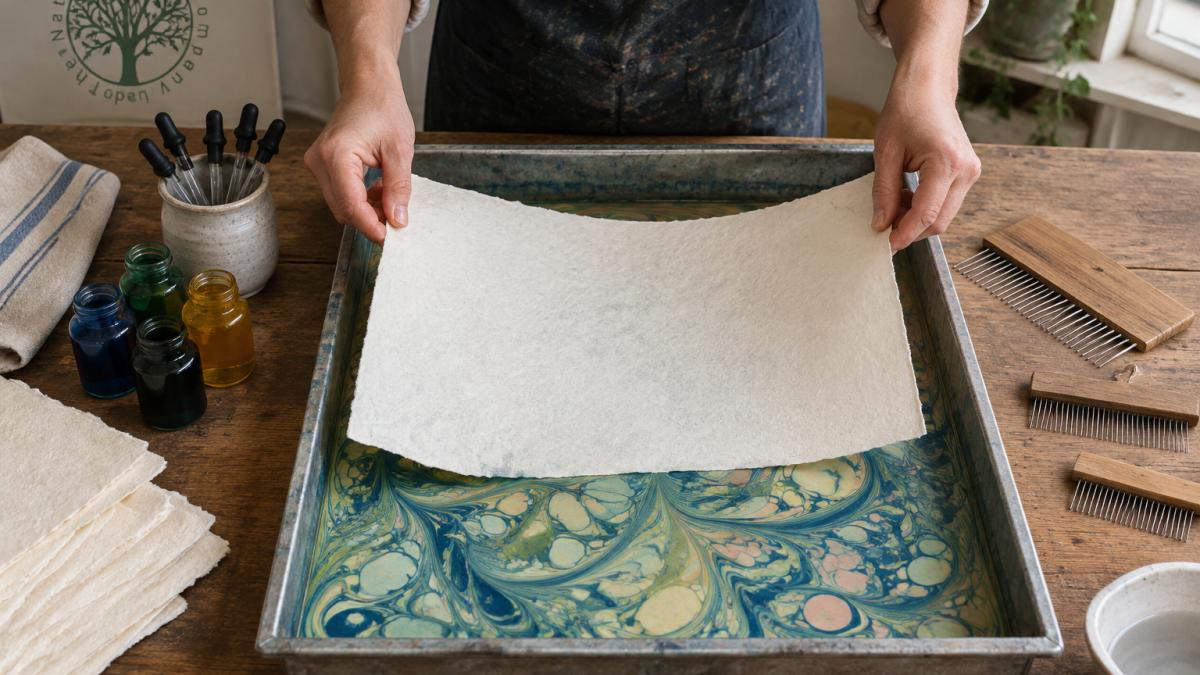
Tools and compatibility. A shallow plastic tray is easier to clean than metal. Pipettes give control for small drops; brushes load more colour faster but flood the bath. Combs with different tooth spacing create the classic nonpareil and chevron patterns, while a single stylus is best for freehand swirls.
Troubles and fixes. Pigment sinks instead of floating when the size is too thin, so mix it thicker and let it stand. Colours muddy when too much is dropped at once, so work sparingly and add one colour at a time.
Watch out: marbling is messy by nature, so cover the work surface, keep a bowl of clean water for rinsing tools, and dry sheets flat on newsprint rather than hanging them, or the wet paper will stretch and cockle.
Decorative Paper for Gift Wrapping That Looks Considered
Decorative paper for gift wrapping should feel as good as it looks, because the recipient touches it before they see what's inside. Handmade Lokta wrapping paper has a tactile surface that machine-produced gift wrap simply cannot replicate, and its natural strength makes it practical for awkward shapes. Each sheet measures approximately 50cm × 76cm, enough for most presents.
Coordinate rather than match. Our Harvest design pairs its metallic gold birds and autumn blooms with burgundy, forest green or ivory ribbon, while the monochrome Bird Garden pattern works with black ribbon or natural string. Finish with a wax seal or a handmade tag cut from the offcuts. If you want to browse handmade wrapping paper in person, the full range is worth a look before you settle on a design.
Printing on Handmade Paper Without Ruining the Texture
Printing on handmade paper works, provided you respect the texture rather than fight it. Textured sheets feed unevenly through desktop printers, so choose a straight paper path, use a manual feed tray where available, and test on a spare sheet first. Expect ink to sit slightly softer than on smooth cardstock, which many people prefer.
For anything important, such as wedding invitations, professional printing removes the guesswork. Our personalised printing service is designed for textured paper. If you plan to print at home, read our guidance on whether handmade paper can go through printers before you load a full sheet.
Sustainable and Recycled Options, and What They Cost
Sustainable decorative paper usually means recycled pulp, tree-free fibres or low-impact dyes. Lokta paper is made from the inner bark of shrubs growing at high altitudes. The Forestry Commission guidance on sustainable wood and paper sourcing explains how responsible fibre sourcing is verified.
Cost is where buyers hesitate, so here is the honest picture. Individual handmade sheets cost more per sheet than a supermarket multipack, but a single sheet goes much further. Our Lokta wrapping papers are £2.99 per large sheet. If you are planning a large project, our guide to buying recycled gift wrap in bulk covers quantities and costs.
Choosing Your First Sheets and Sampling the Range
Start with a sample, not a stash. Order one or two sheets in each weight and finish you are considering, then handle them: fold a corner, write on the back, press a glue line. You will learn more in ten minutes than from any description.
A sensible first order looks like this:
- One smooth cardstock for card blanks and printing
- One handmade Lokta sheet for wrapping and collage
- One vellum sheet for overlays
- One patterned sheet in a style you love
From there, scale up only what you actually used. Most crafters overbuy patterns and underbuy neutrals, so weight your order toward plain sheets and let the decorative paper do the talking.
Choosing decorative paper gets much easier once you stop shopping by pattern and start shopping by project, weight and finish. That is exactly how we have built our range at The Natural Paper Company: handmade cotton rag and Lokta papers, a personalised printing service for textured sheets, and wax seals and silk ribbons to finish the job. Get started with The Natural Paper Company and choose sheets that suit your project from the first cut.
Frequently Asked Questions
What is decorative paper used for?
Decorative paper covers card making, scrapbooking, bookbinding, collage, journalling and gift wrapping, plus home decoration such as drawer lining and covered boxes. Patterned sheets also work for papercraft projects and handmade gift tags. Choose the weight to suit the job: lighter sheets fold and layer well, while heavier cardstock holds structure for cards and boxes. Handmade Lokta sheets are strong enough for both wrapping and craft use, so leftover pieces from a gift wrap session can become cards or embellishments rather than waste.
Can handmade paper be used for printing?
Yes, but textured handmade paper needs a printer that can handle uneven surfaces and a test sheet before you commit to a full run. Printing on handmade paper works best when you choose designs with bold shapes rather than fine hairlines, and when you allow for slightly softer colour on absorbent fibres. Order a sample first and check that your design reads clearly against the natural texture. Our personalised printing service is designed for textured paper.
How do you stop decorative paper from curling?
Curling usually comes from moisture imbalance: one side absorbs water from glue, paint or damp air and expands faster than the other. Store sheets flat between board or in a folder, apply adhesive thinly and evenly, and avoid soaking thin papers with wet media. For marbling, dry sheets flat under weight rather than hanging them. Humid rooms make the problem worse, so keep paper away from radiators and kitchens. Heavier cardstock resists curling better than thin decorative sheets, which is worth remembering when you plan a large card making batch.
Is premium handmade paper worth it for a hobbyist?
The difference shows most in how the paper handles: The texture of handmade sheets gives a distinctive finish. At £2.99 for a 50cm x 76cm Lokta sheet, a single piece covers a large gift or several cards, so the cost per project is modest. Start with one or two sheets alongside your usual supplies, test them with your pens and glue, and decide from the results rather than the price tag alone.
