

How to Choose Cotton Rag Paper for Art and Print
Quick Summary
Cotton rag paper is used because it is made from cotton fibres rather than wood pulp, which gives it high tear resistance, resistance to yellowing over time, and even absorption of water for wet media. It suits watercolour, printmaking, archival work, and keepsakes, while standard wood-pulp paper remains the better choice for drafts and notes.
- Cotton rag paper is made from 100% recycled cotton rag, not newly felled trees.
- It has long fibres and high tear resistance, compared with moderate tear resistance for wood pulp.
- It resists yellowing, while wood-pulp paper can yellow over time.
- Choose it when sheets will be painted with wet media, framed, archived or handled repeatedly.
- Handmade sheets can shed fibre dust, so clean your inkjet print head more often.
Table of Contents
- What Cotton Rag Paper Is and How It Is Made
- Why Use Cotton Rag Paper: The Core Benefits
- Cotton Rag Paper vs Wood Pulp Paper
- Using Cotton Rag Paper for Watercolour
- Using Cotton Rag Paper for Printing
- Other Uses for Cotton Paper: Stationery, Wedding Invitations and Gifts
- When Cotton Rag Paper Is Unnecessary, and How to Store It
- Choosing Your Cotton Rag Paper for Your Next Project
- Frequently Asked Questions
What Cotton Rag Paper Is and How It Is Made
Last Updated: October 27, 2026
Cotton rag paper is a fine art and stationery paper made from cotton fibres rather than wood pulp, and that single difference shapes how it looks, feels and lasts. The Natural Paper Company makes its handmade sheets from 100% recycled cotton rag, so the raw material comes from cotton textile offcuts and waste rather than newly felled trees. For anyone choosing paper for art, print or a wedding invitation suite, understanding that origin explains most of what follows.
The making process is slow and deliberate. Rag is cleaned, cut or beaten into a fine pulp, then suspended in water and lifted onto a mould and deckle, which is a frame that shapes the sheet and leaves the signature deckled edge. Each sheet is formed by hand, pressed and dried, which is why no two sheets are identical. Our Premium White is made this way, and the surface is a medium-rough texture that many artists find easy to work on.
Why Use Cotton Rag Paper: The Core Benefits
A quick decision test. Choose cotton rag when at least one of these is true: the sheet will be painted on with wet media, framed or archived, folded or handled repeatedly, or given as a finished piece. To try the paper for yourself, you can order a ready-made white handmade cotton rag notebook. Choose standard wood-pulp paper when the sheet is for drafts, practice, notes or anything you will not keep. Cotton rag is not the right choice for every project, and we come back to that in the section on when it is unnecessary.
Cotton Rag Paper vs Wood Pulp Paper
| Feature | Cotton Rag Paper | Wood Pulp Paper |
|---|---|---|
| Fibre source | Cotton textile waste | Trees |
| Fibre length | Long | Short |
| Tear resistance | High | Moderate |
| Ageing behaviour | Resists yellowing | Can yellow over time |
| Texture | Medium-rough, visible tooth, deckled edge on handmade sheets | Usually smooth and uniform |
| Wet-media performance | Absorbs water evenly, resists cockling at heavier weights | Can buckle and pill under heavy washes |
| Typical price | Higher | Lower |
| Best uses | Watercolour, printmaking, archival work, wedding stationery, keepsakes | Everyday printing, notes, sketching drafts, practice sheets |
Using Cotton Rag Paper for Watercolour
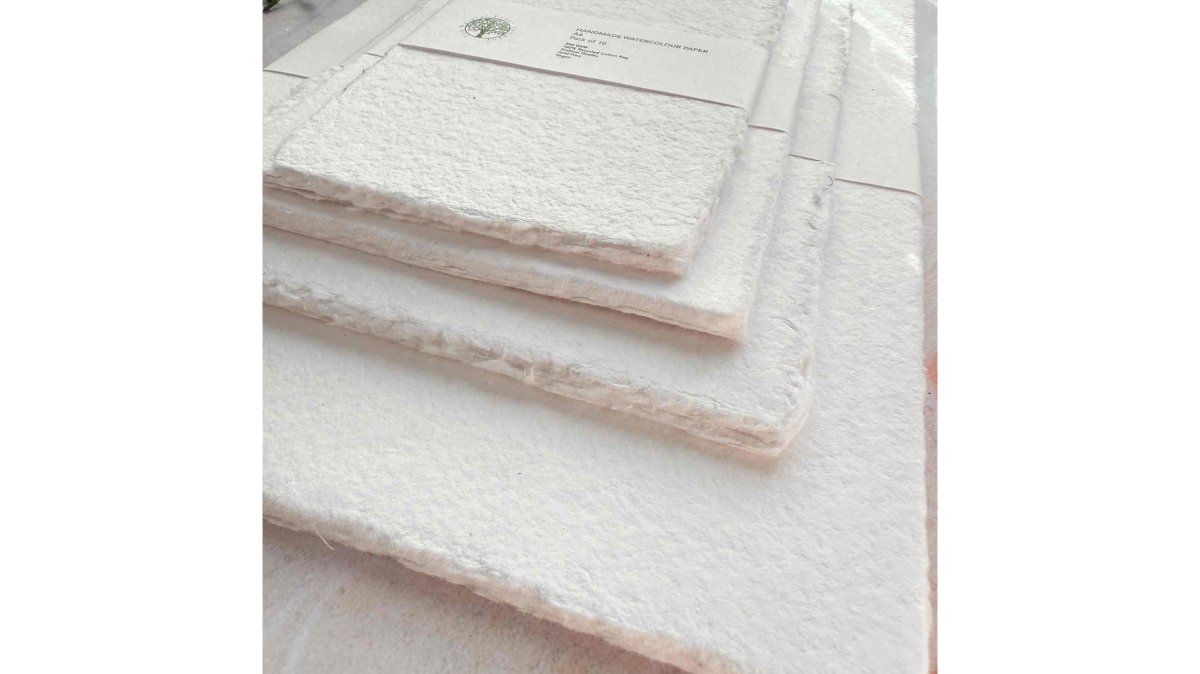
Our Watercolour Paper - White is made from 100% recycled cotton rag and is described as suitable for painting, calligraphy and ink work.
Using Cotton Rag Paper for Printing
Printing on handmade paper has one practical caveat. If you print with wood blocks or stamps, you can shop the Cottontail Indian Wood Block Stamp for your printing projects. Handmade sheets can shed fibre dust, which builds up in an inkjet printer over time. If you plan to run Whisper White through a home printer regularly, clean the print head more often than you would with standard office paper. You can also order Mushroom Handmade Cotton Rag Paper sheets to test your printing method.
Premium White Handmade Paper (vegan) →
Other Uses for Cotton Paper: Stationery, Wedding Invitations and Gifts
Cotton paper also works well for gift tags and wrapping accents, where its strength stops tags tearing at the eyelet.
When Cotton Rag Paper Is Unnecessary, and How to Store It
Storage affects how long any paper stays in good condition. Keep sheets flat, in a dry room away from direct sunlight, and in acid-free sleeves or folders. Avoid storing paper in damp cupboards or against exterior walls, where humidity can cause cockling and mould. Consistent environmental control remains the most effective way to care for prints, ensuring that your investment retains its structural integrity and visual clarity over the years.
Choosing Your Cotton Rag Paper for Your Next Project
Start with the medium. For watercolour, choose a medium-rough 150gsm sheet or a 300gsm card. For printing, check that the surface suits your method and that your printer can handle handmade sheets. For stationery, decide whether the deckled edge and texture suit the tone of your project.
Then pick a format. The Natural Paper Company lists paper and card in a range of sizes, including A6 and A4, and lists matching envelopes for Premium White Handmade Paper.
Frequently Asked Questions
Is paper made from cotton?
Yes, some paper is made from cotton. The Premium White Handmade Paper from The Natural Paper Company is made from 100% recycled cotton rag and is acid free.
Does cotton rag paper last longer than ordinary paper?
The Whisper White Handmade Cotton Rag Paper is acid free.
Is cotton rag paper good for watercolour?
The Watercolour Paper - White is 150gsm, has a medium-rough surface and a small degree of absorbency, and is listed for watercolour painting, calligraphy and ink work.
Can you print on cotton rag paper?
The Whisper White Handmade Cotton Rag Paper has a smoother texture than the premium range and can be printed on with most printers. Its listing notes that handmade papers can leave dust residue that may damage a printer if used continuously, and recommends regularly cleaning the print head when working with handmade papers on a regular basis.
