

What Is Furoshiki Gift Wrapping? A Beginner's Guide
Last Updated: October 31, 2026
Quick Summary
Furoshiki gift wrapping is a Japanese method of wrapping a present in a single square piece of cloth, with no tape, paper or bow. The cloth is folded and knotted around the gift and can be untied and reused.
- Use a square cloth about 60 to 70 cm for medium gifts such as standard boxes and books.
- Measure the longest side plus the height, multiply by 2.5, then divide by 1.41 to find the cloth size.
- Tie a double knot so the wrap does not loosen during transit.
- Cotton is the easiest fabric for beginners because it holds its folds well and is easy to tie.
- Keep two cloths, around 50 cm and 70 cm, to cover most everyday gifts.
Table of Contents
- What Furoshiki Is and Where the Technique Comes From
- What the Word Furoshiki Means
- Choosing a Furoshiki Wrapping Cloth Size Guide for Your Gift
- Best Fabric for Furoshiki: Cotton, Silk and Other Options
- Step-by-Step Furoshiki Wrapping Techniques for Boxes
- Furoshiki Wrapping Techniques for Bottles and Irregular Shapes
- Booking Your Next Gift Wrap With Reusable Cloth and Paper
- Frequently Asked Questions
What Furoshiki Is and Where the Technique Comes From
Furoshiki gift wrapping is a Japanese method of wrapping items in a single square piece of cloth, with no tape, no paper and no bow. The cloth is folded and knotted around the gift, and it can be untied and reused. Japan's Ministry of the Environment guidance on reusable packaging
The technique is simple to learn, and it turns a present into something the recipient often wants to keep.
Furoshiki has a long history in Japan. People once used square cloths to carry clothes, bento boxes and other goods. Over time, the cloth became a way to wrap gifts with care and respect.
A common mistake is treating furoshiki as a craft for experts only. The basic folds take a few minutes to learn, and most beginners get a neat result on their first try.
What the Word Furoshiki Means
The word is built from two parts: "furo", meaning bath, and "shiki", meaning spread or mat. In the past, people used these cloths to wrap clothes while they bathed, then carried their belongings in the same cloth.
That history explains why the cloth is square and why it works for so many shapes. The word describes the object as much as the act of wrapping.
Choosing a Furoshiki Wrapping Cloth Size Guide for Your Gift
The right cloth size decides whether your wrap looks neat or lumpy. A cloth that is too small will not reach the corners, and one that is too large will bunch up and make the knot bulky. Most beginners buy one cloth and then find it suits only one shape of gift, so it is worth understanding how the measurement actually works before you buy.
Measure the gift, not just the width
A furoshiki is a square, and the cloth has to travel diagonally across the gift and back again to meet itself. That means the useful measurement is the diagonal of the cloth, not the side length. A 70 cm square has a diagonal of roughly 99 cm, because the diagonal of a square is about 1.41 times the side. That diagonal is the length of fabric you have to wrap with.
A practical method most practitioners use:
- Measure the longest side of the gift, then measure its height (or depth).
- Add the two figures together.
- Multiply by about 2.5 to allow for the wrap, the fold-over and a knot with enough tail to tie.
- Divide by 1.41 to convert that diagonal figure into the side length of the square cloth you need.
For a book measuring 25 cm by 18 cm and 3 cm thick, the longest side plus height is 28 cm; multiplied by 2.5 that is 70 cm of diagonal, which points to a cloth of about 50 cm square. Round up rather than down, a little extra cloth tucks away neatly, while a short corner cannot be fixed.
A working size guide
- Small gifts (jewellery boxes, mugs, small books): a cloth about 45 cm square
- Medium gifts (standard boxes, paperback and hardback books, folded clothing): a cloth about 60 to 70 cm square
- Large gifts (wine boxes, bundled items, small appliances): a cloth about 90 cm square or larger
- Bottles: measure the bottle height and its widest point; a 70 cm cloth usually suits a standard wine bottle, while a taller bottle needs 90 cm
When the gift is an awkward shape
For irregular objects, measure the longest dimension in any direction and treat that as the longest side. A plant pot, for example, needs the cloth to clear the rim and still gather above the foliage, so add 10 to 15 cm to your diagonal figure. If you are between two sizes, choose the larger cloth: the extra fabric can be folded into a neat pleat, but a cloth that is too small will not meet at the top no matter how carefully you fold.
A useful habit is to keep two cloths, one around 50 cm and one around 70 cm, which between them cover most everyday gifts, and add a 90 cm cloth for bottles and larger boxes.
The table below sums up the suggested cloth sizes for different gift types so you can pick the right cloth at a glance.
| Gift type | Suggested cloth size | Note |
|---|---|---|
| Small gifts (jewellery boxes, mugs, small books) | About 45 cm square | Fits compact items |
| Medium gifts (standard boxes, paperback and hardback books, folded clothing) | About 60 to 70 cm square | Most common everyday size |
| Large gifts (wine boxes, bundled items, small appliances) | About 90 cm square or larger | Needs extra fabric |
| Bottles | 70 cm for standard wine bottle; 90 cm for taller bottle | Measure height and widest point |
| Formula: diagonal needed | Longest side plus height, times 2.5 | Divide by 1.41 for square side |
Best Fabric for Furoshiki: Cotton, Silk and Other Options
Cotton is the easiest fabric for beginners. It holds its folds well and is easy to tie. Many people also choose silk for a more finished look, although silk slips more and needs a firmer knot. You can browse our silk ribbons to add a luxurious accent to the wrap.
UK guidance on caring for natural fibres
Step-by-Step Furoshiki Wrapping Techniques for Boxes
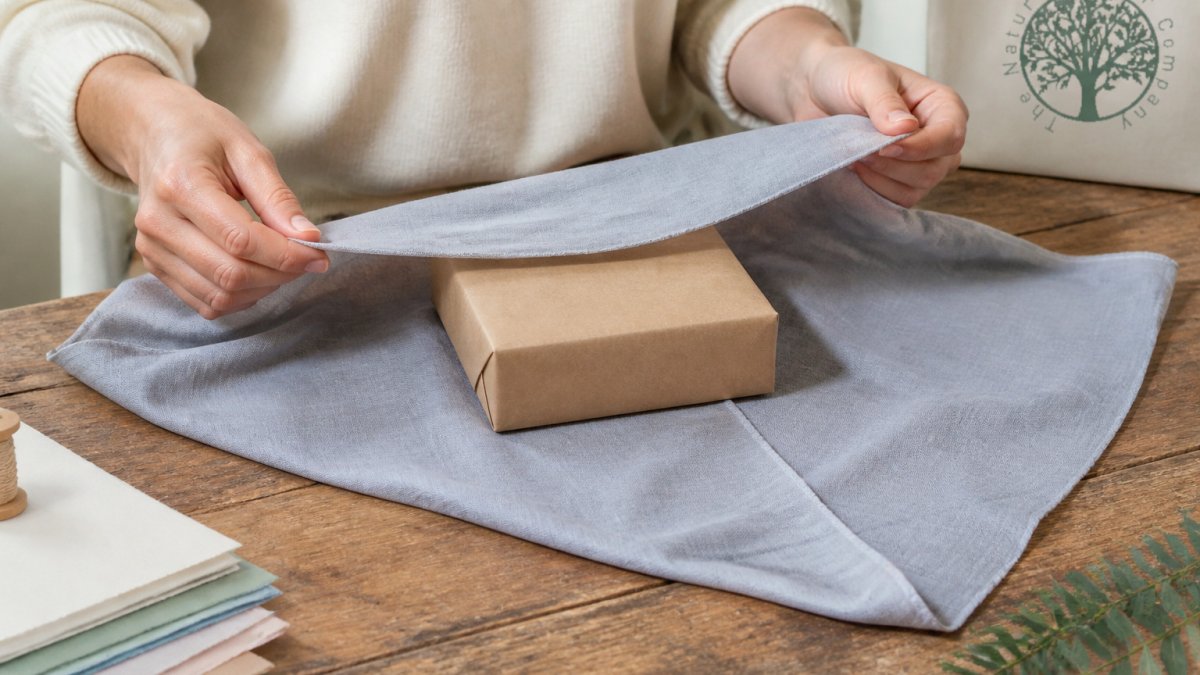
Boxes are the most common gift shape and a good place to start. The method below is the diagonal wrap, sometimes called the basic or hira-zutsumi wrap, and it is the one most beginners learn first. Work on a flat surface and keep the cloth smooth as you go, creases set into the fold and are hard to remove later.
Before you fold
Lay the cloth face down so the pattern or the right side of the fabric is against the table. Place the box in the centre with its base on the cloth and square it up to the corners; a box set at an angle will produce a lopsided wrap. If the cloth is new cotton, press it first, a soft crease from storage will show in the finished knot.
The diagonal wrap, step by step
- Place the box in the centre of the cloth, base down, with the corners of the box pointing towards the corners of the cloth.
- Bring one corner up and over the box, then bring the opposite corner over to meet it. Keep the fabric taut across the top face as you do this.
- Pull the two corners together at the top and tie a single knot, then a second knot to lock it. A double knot is what stops the wrap loosening in a bag.
- Fold the side corners in neatly, tucking them under the knot so the raw edges are hidden.
- Tie the remaining two corners together over the top to secure the wrap, or bring them around to the base and knot them there for a flatter finish.
- Adjust the folds so the cloth sits flat and the knot sits centred, then smooth the fabric from the knot outwards.
Each step takes less than a minute once you have practised once or twice. The two things that separate a neat wrap from a messy one are tension and symmetry: pull the fabric firmly at every stage, and check that the box stays centred before you tie the final knot.
Troubleshooting the common problems
- The fabric slips while you tie. Cotton holds better than silk or satin. If you are using a slippery cloth, tie a double knot and tuck the ends under the wrap rather than leaving them loose.
- The corners are too short to meet. The cloth is too small for the gift. Either choose a larger cloth or switch to a flatter wrap that uses less fabric at the top.
- The knot loosens in transit. Use a double knot and keep the tails short; long tails catch and pull. For heavy gifts, knot at the base rather than the top.
- The wrap looks lumpy. The box was probably off-centre. Untie, re-square the box to the cloth corners and start again, it takes less time than trying to smooth a crooked wrap.
- The gift is fragile. Pad the box with tissue before wrapping, and avoid pulling the fabric tight across glass or ceramic.
!Hands folding a square cotton cloth diagonally around a small rectangular gift box on a wooden table in soft natural daylight
Furoshiki Wrapping Techniques for Bottles and Irregular Shapes
Bottles need a different approach. Place the bottle upright in the centre of the cloth, then bring two opposite corners up around the neck and tie them in a knot. Fold the remaining corners down and tie them together at the base for a secure hold.
Irregular shapes such as plants or bundled items work well with the same idea. Gather the cloth around the object, then twist and knot it at the top. The key is to keep the knot firm, so the gift does not shift when carried.
Booking Your Next Gift Wrap With Reusable Cloth and Paper
Reusable cloth is a strong choice for anyone who wants to cut down on waste. If you prefer a disposable option, recycled paper is another good route. Our Lokta Wrapping Paper - Niwa offers a handmade alternative for the occasions when paper suits you best.
Whichever you choose, the furoshiki method gives you a neat, thoughtful finish with materials you can reuse again and again.
Frequently Asked Questions
What size fabric do you need for furoshiki wrapping?
A square cloth roughly two to three times the length of the gift's longest side usually works well. For a small box, a 50cm cloth is often enough, while a larger box or a wine bottle needs more fabric to gather at the top. Check the cloth size guide in this article against your gift's dimensions before you start, and keep a spare cloth in a larger size for awkward shapes.
What fabric is best for furoshiki?
Lightweight cotton and silk are the most popular choices because they fold crisply, hold knots well and drape neatly around corners. Thicker cotton works for heavier items, while very slippery fabrics can be harder for beginners. The best fabric depends on the gift's weight and how you plan to reuse the cloth afterwards.
Is furoshiki gift wrapping sustainable?
Furoshiki is considered sustainable because one reusable cloth can wrap many gifts over many years, instead of being thrown away after a single use. It also needs no tape or sticky labels, which makes the cloth easier to recycle or store. The main environmental benefit comes from reuse, so choose durable fabric you will actually keep using.
